
Single speed frame size affects much more than whether a bike feels too big or too small. The right frame should fit your body, riding position and intended use while also providing the compatibility needed for your wheels, tires, drivetrain and other components.
This guide gives you a practical order for comparing frames. The aim is not to find one frame that is best for everyone. It is to identify a frame that fits your body, supports your intended use and gives every major component a clear path to compatibility.
Table of Contents
Start with the bike you want to build
Define the use before comparing materials or colours. A fast city bike, daily commuter and comfort-focused all-road single-speed ask different things from a frame. Stop frequency, road quality, hills, luggage and preferred riding position should influence the choice.
- Fast urban riding: responsive handling, an efficient position and moderate tire clearance may be priorities.
- Daily commuting: predictable handling, brake options, durable wheels and practical tire clearance matter more.
- Rough streets: extra tire volume and a less aggressive position can improve control and comfort.
- Longer rides: fit, hand position and the ability to tune the cockpit become especially important.
A frame should support the real route, not only the visual style of the finished bike. Use the Bike Builder questionnaire to establish a first direction before shopping.
Single speed frame size is only the beginning
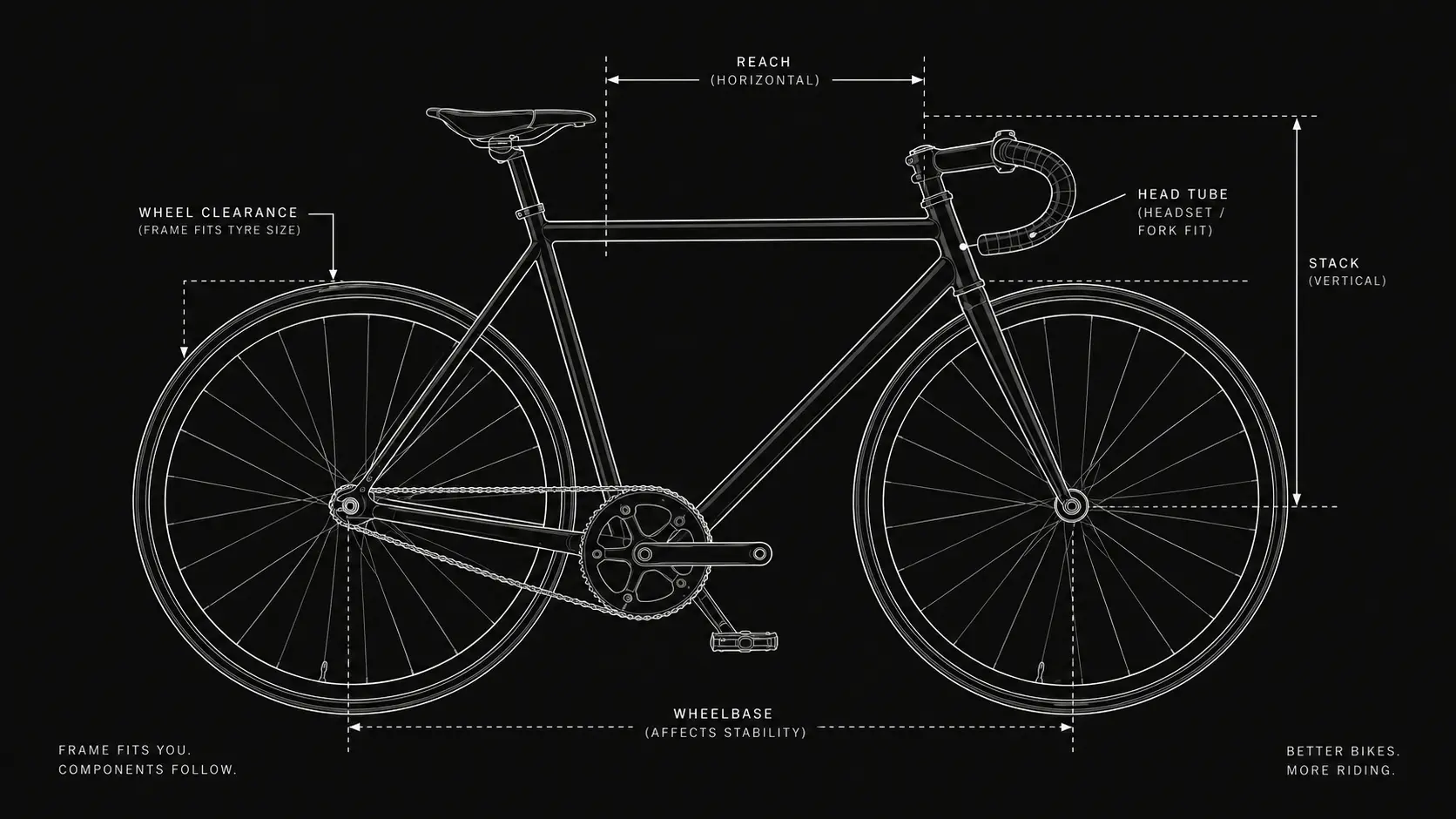
A single speed frame size label such as 52, 54 or medium is only a starting point. Brands measure and name sizes differently, and two frames with the same label can place the handlebar and saddle in noticeably different positions. Always compare the geometry chart for the exact model and size.
Reach describes the horizontal distance from the bottom bracket to the top of the head tube. It strongly affects how long the bicycle feels. Stack describes the vertical distance between those points and helps indicate how high or low the front of the bicycle can be set. Effective top-tube length, seat-tube angle and head-tube length add useful context.
Use a bicycle that already fits you as a reference for single speed frame size. Compare its stack, reach and contact-point position with the candidate frame. Stem length, stem angle, spacers and seatpost setback can fine-tune a sensible frame, but they should not be used to rescue a frame that is fundamentally too large or too small.
Choose the dropout system carefully
Single speed frame size also needs to work with a safe chain-tensioning design. A single-speed drivetrain has no rear derailleur to take up chain slack. Traditional horizontal or rear-facing track dropouts let the rear axle move backward and forward. Sliding dropouts offer adjustment through a movable insert. Some frames use eccentric bottom brackets or another manufacturer-approved system.
Vertical dropouts fix the axle in one position. They can work for some freewheel single-speed conversions with an appropriate chain-tensioning solution, but they give less direct adjustment and are not automatically suitable for fixed-gear use. Do not rely on a so-called magic gear whose chain length happens to fit. Chain wear changes the tension over time.
Look for enough adjustment range to accommodate chain wear and modest gearing changes. The dropout should also match the rear axle type and provide secure wheel retention.
Confirm rear hub spacing and axle fit
When comparing single speed frame size and compatibility, confirm that the inside distance between the rear dropouts matches the hub’s over-locknut dimension, often abbreviated as OLD. Dedicated track and single-speed frames commonly use different rear spacing from road, gravel or mountain-bike frames. Confirm the number in the frame and wheel specifications rather than guessing from the bicycle category.
Also check whether the frame accepts solid axles with axle nuts, a quick-release skewer or a thru-axle system. A hub can have the right spacing and still use the wrong attachment format. Cold-setting or forcing a frame to accept different spacing should never be treated as a universal solution, especially with aluminium or carbon frames.
Match the wheel size and tire clearance
Many urban single-speed builds use 700c wheels, but the frame and fork must explicitly support the chosen diameter. The ISO or ETRTO bead-seat diameter is more precise than a traditional wheel name. A common 700c rim and tire use a 622 mm bead-seat diameter.
Tire clearance is a system limit. The frame, fork, rims, brakes and actual mounted tire width all matter. A tire marked 32 mm can measure wider or narrower depending on the rim and inflation. Schwalbe explains that tire and rim diameter must match and provides technical tire and rim sizing guidance.
Choose a frame with clearance for the surface you ride and a sensible safety margin. Mudguards need additional room. Never assume that a frame advertised for one nominal tire size will accept every tire carrying that number.
Check the brake system before buying
Once single speed frame size and geometry are sensible, check the braking system. The frame and fork determine which brakes can be installed. Rim brakes need suitable mounting points and rims with compatible braking surfaces. Caliper reach must cover the distance from the mounting point to the rim. Disc brakes need the correct frame and fork mounts, rotor clearance and disc-compatible hubs.
Brake choice can also affect tire clearance and wheel selection. Treat the lever, cable or hose, caliper, mount, rotor or rim, and wheel hub as one connected system. A frame marketed as minimalist is not useful if it cannot support the safe braking setup needed for your roads and local requirements.
Understand the fork and headset standard
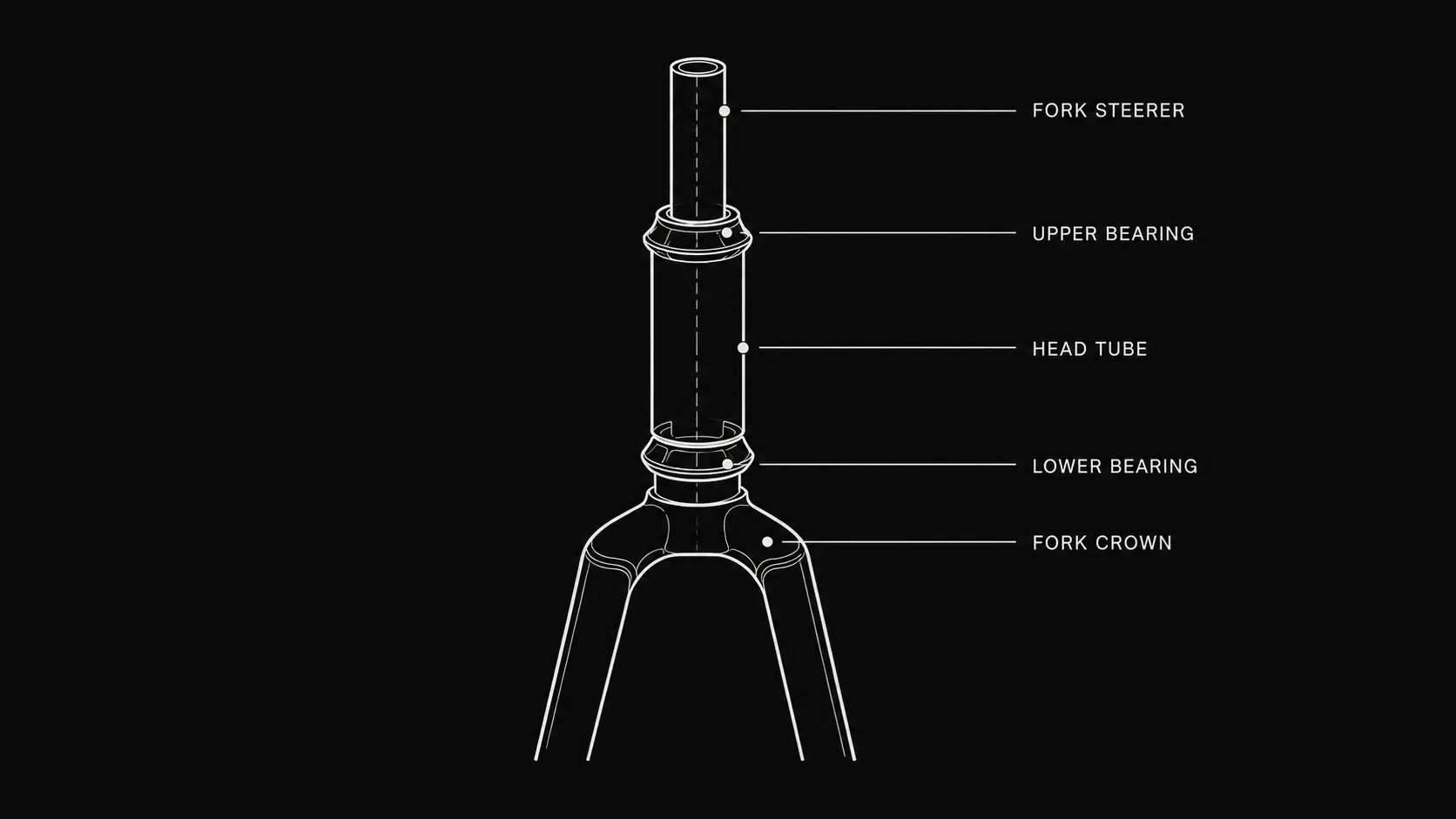
A frameset may include the fork and headset, only the fork, or neither. If parts are separate, identify the head-tube interfaces, headset type, fork steerer diameter and crown-race seat. Labels such as straight or tapered do not provide every measurement needed.
Headsets can use external cups, zero-stack cups or integrated bearings. The upper and lower interfaces may be different sizes. Cane Creek’s headset identification guide explains the standardized codes used to describe the frame and fork interfaces.
The fork must also match wheel size, brake type, axle format and intended geometry. A different axle-to-crown length or fork offset can change handling, so physical fit alone is not enough.
Identify the bottom bracket shell
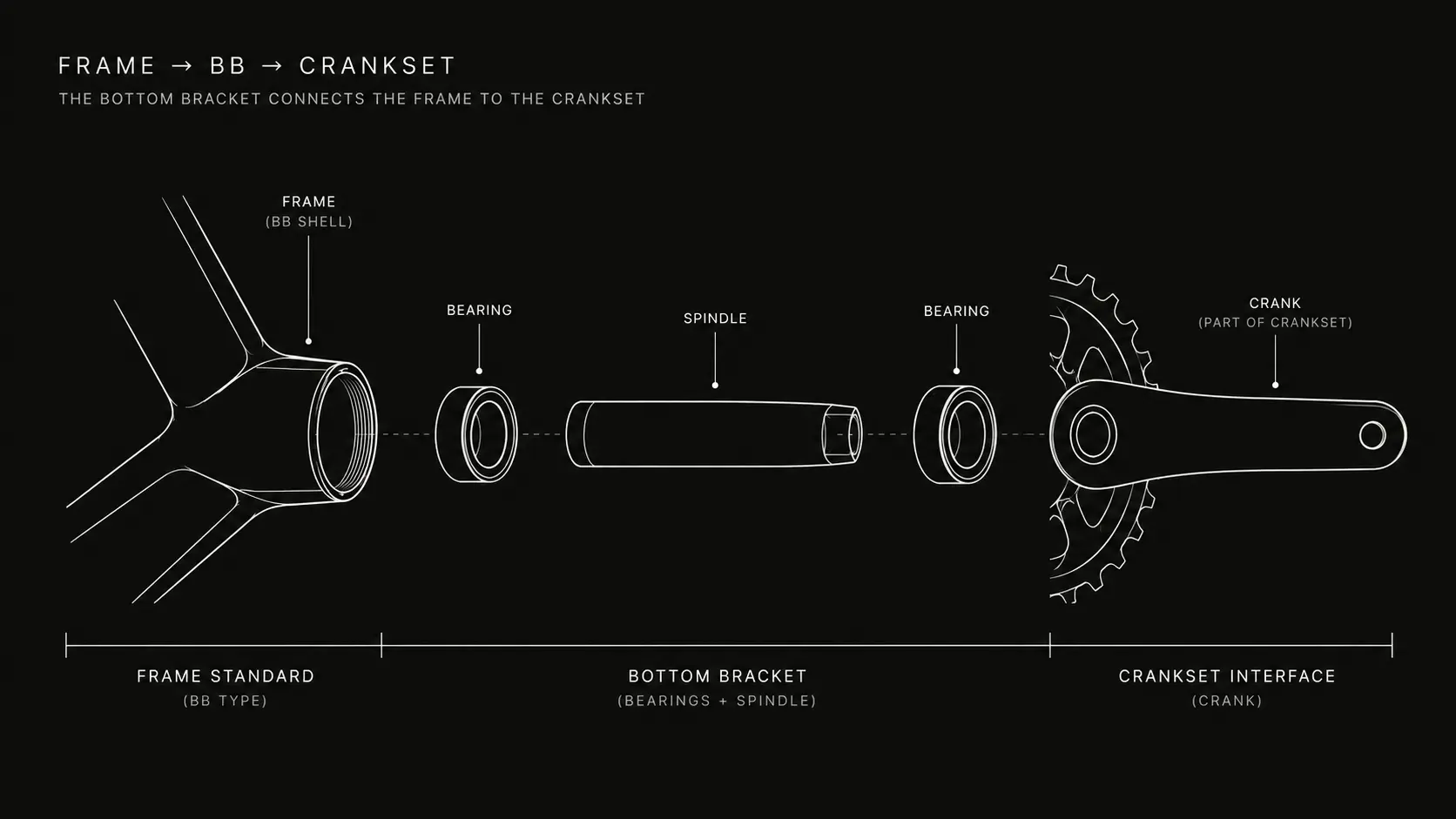
The frame’s bottom bracket shell sets one side of the crankset compatibility problem. The specification should state whether the shell is threaded or press-fit, together with its width, diameter or standard. A threaded description should identify the thread standard rather than simply saying threaded.
The crankset defines the other side through its spindle diameter, length and bearing arrangement. The bottom bracket must suit both. Park Tool’s bottom bracket standards reference shows why parts that look similar are not necessarily interchangeable.
Bottom bracket and crank choice also affect chainline. On a single-speed, the front chainring needs to align appropriately with the rear freewheel or sprocket, so this standard should be resolved before buying the drivetrain.
Record the seatpost and clamp dimensions
Seatpost diameter is usually marked in tenths of a millimetre, and visually similar posts may not be interchangeable. The frame listing should provide the required post diameter and either the seat-clamp diameter or the included clamp.
Check the available insertion depth and minimum-insertion requirements when choosing a post. Riders needing a high saddle position must still keep enough post inside the frame. If the frame has an unusual shape, internal routing or integrated clamp, confirm the manufacturer’s instructions before ordering.
Frame material changes feel, price and repair options
Material matters, but it should come after fit and standards. Steel is common in single-speed and track-style frames because it can create a durable, relatively straightforward structure. Aluminium can provide a light and stiff frame at an accessible price. Carbon can shape stiffness and weight more precisely, but usually costs more and demands careful inspection and torque control.
The ride cannot be predicted from material alone. Tube dimensions, frame design, fork, tires, pressure and contact points all influence comfort and handling. Choose the frame for its complete design and documentation rather than assuming one material guarantees a particular feel.
Look for practical mounting points
A clean frame can still support everyday use. If the bike may become a commuter, check for bottle-cage, mudguard and rack mounts before buying. Retrofitting accessories with clamps can be possible, but purpose-built mounts are generally cleaner and easier to assess.
Cable-routing details matter too. Confirm that the frame supports the intended brake routing and that housing stops, guides and entry ports suit the chosen system. Unused derailleur guides are mainly a visual issue, while missing brake routing can become a functional one.
Inspect a used frame before committing
A used frame can make an excellent foundation, but single speed frame size labels and photos are not enough. Check for cracks, dents, corrosion, damaged threads, distorted dropouts and signs of impact. Inspect the bottom bracket shell, head tube, seat-tube opening, brake mounts and dropout faces closely.
Confirm that the seatpost is not seized and that the bottom bracket threads or bearing seats are usable. Ask for the exact model, year and geometry chart where possible. Unknown standards can erase the apparent saving when several incompatible parts need replacing.
A single-speed frame compatibility checklist
| Frame detail | What to confirm | What it affects |
|---|---|---|
| Size and geometry | Stack, reach and manufacturer chart | Fit, posture and handling |
| Dropouts | Tensioning method and axle format | Chain tension and wheel security |
| Rear spacing | Specified hub OLD | Rear wheel compatibility |
| Wheel and tire | Diameter and maximum clearance | Wheels, tires and ride comfort |
| Brakes | Mount type, reach or rotor support | Brakes, wheels and levers |
| Head tube | Headset code and steerer support | Headset and fork |
| Bottom bracket | Shell standard and dimensions | Bottom bracket, crank and chainline |
| Seat tube | Post and clamp diameter | Seatpost and saddle position |
If a seller cannot provide these details, pause before buying. Compatibility information is part of the product, not optional fine print.
Choose a frame that makes the rest of the build easier
The best single speed frame size is one that fits your body and intended riding position. The best frame also supports your roads and gives every major component a clearly documented interface. A sensible frame turns later purchases into checks. A vague frame turns them into guesses.
Once the frame is selected, continue with the complete single-speed build guide and the single-speed gear ratio guide. Then create your starting specification before buying components.
Turn your riding needs into a frame direction.
Use Bike Builder to define your fit, surface, comfort and speed priorities, then compare frames against a clearer specification.